
We know from the Guttmacher Institute’s Abortion Provider Census (APC) that the number of induced abortions per year surged in the 1970s after Roe v. Wade and Doe v. Bolton.
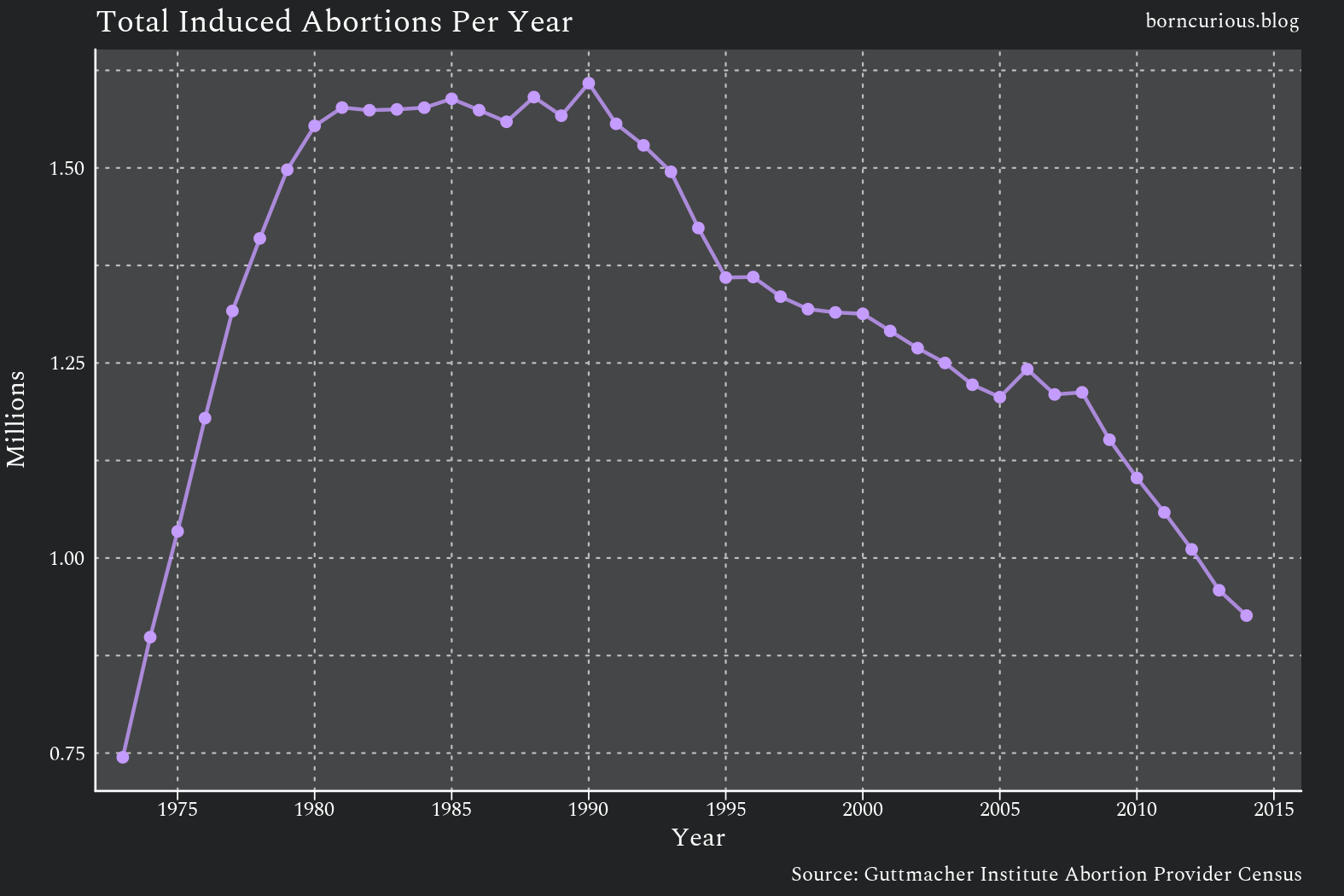
At first blush, it may look like this did not affect the number of live births, which also surged in the 1970s.
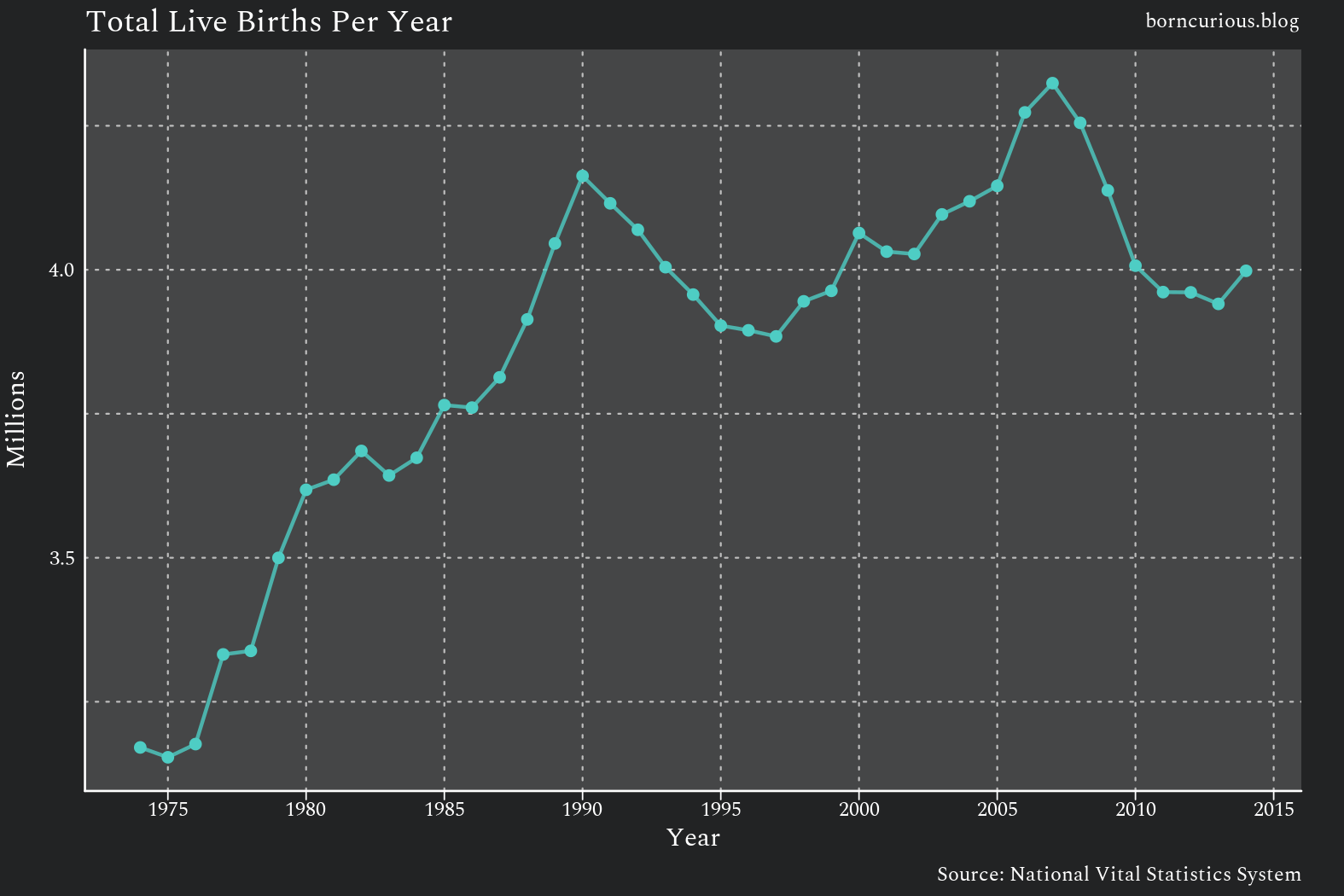
However, this is confounded by the fact that the number of women of reproductive age increased throughout the 20th century.
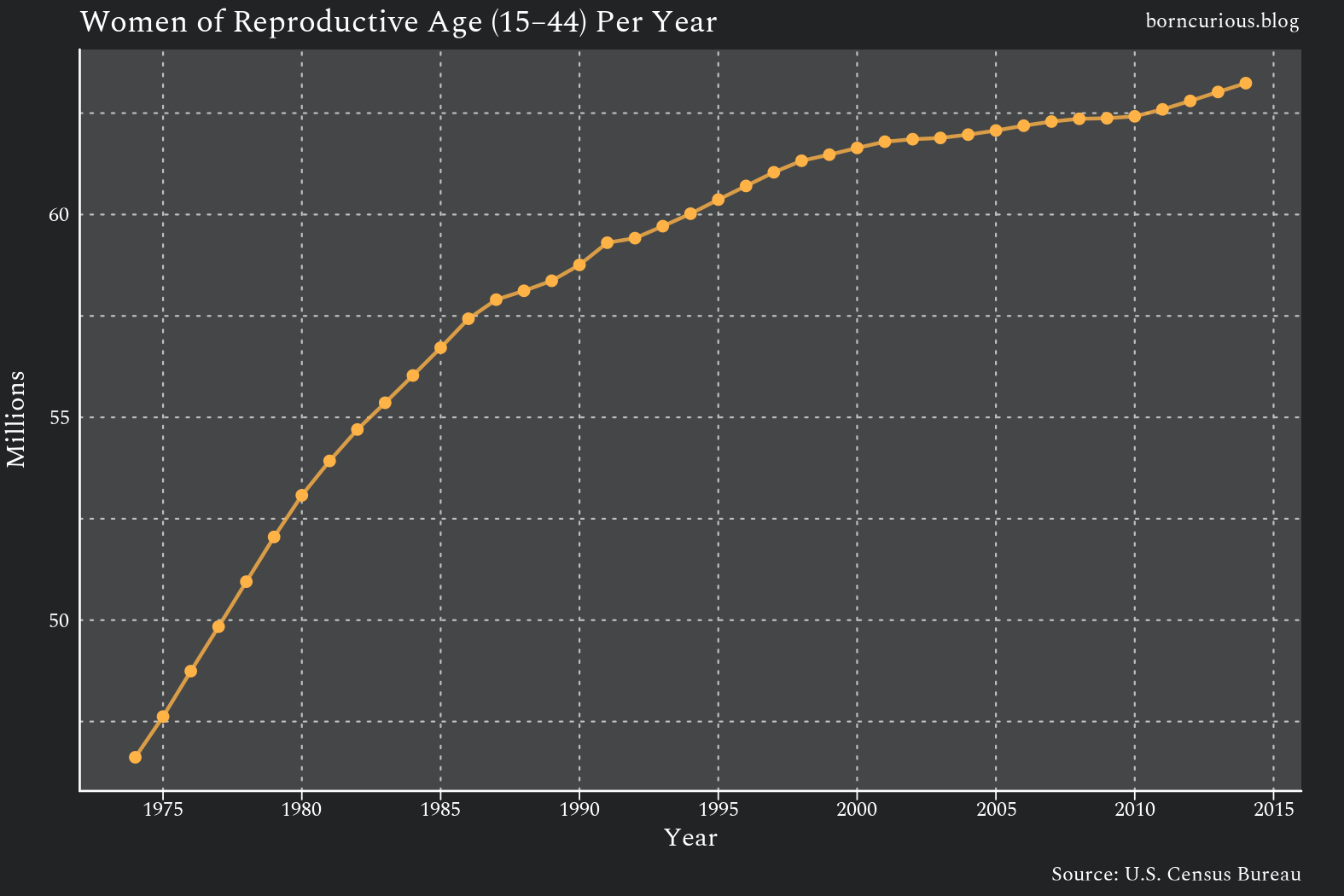
This analysis follows the latest iterations of the National Survey of Family Growth (NSFG) and takes 15 to 44 years as “reproductive age.” (Henceforth, plots that say “per woman” mean per woman of reproductive age.)
Even adjusting for population growth, the rate of induced abortions per woman surged in the 1970s post-Roe and Doe.
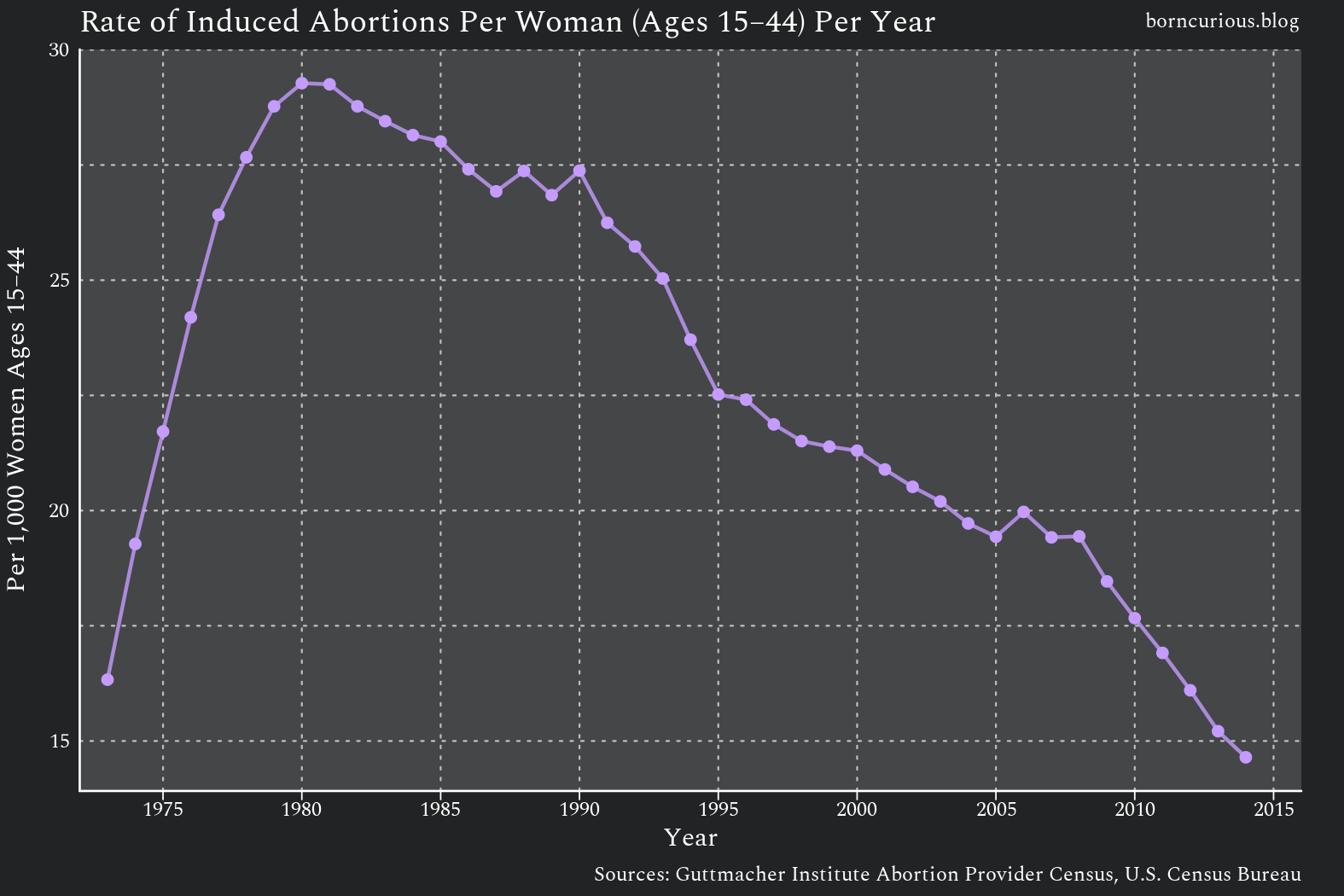
However, after the population adjustment, we can see that the picture is more complicated for live births.
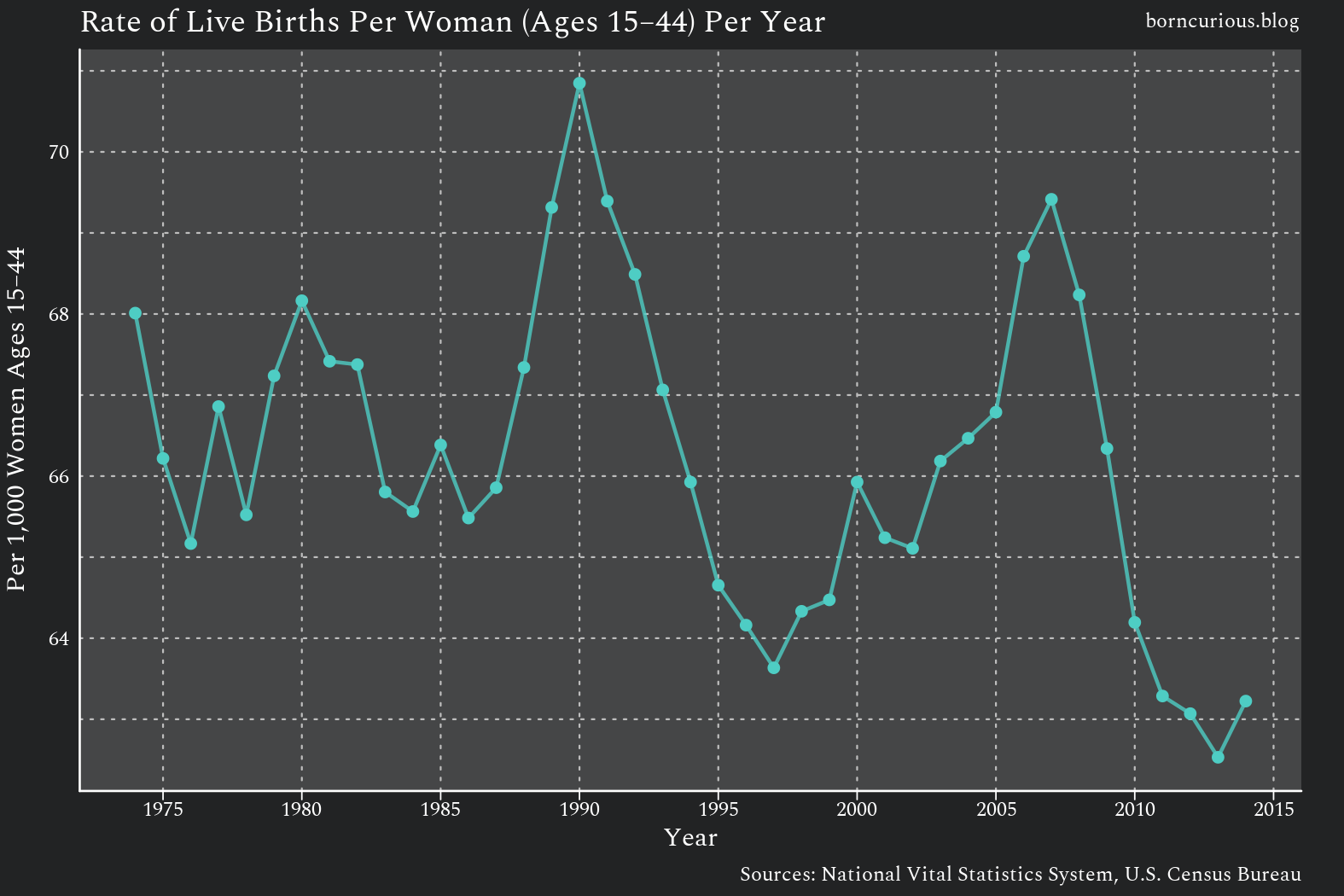
The surge in abortions may have indeed altered the trajectory of the overall birth rate in the 1970s and 1980s.
Here is where the analysis of pregnancy intent versus outcome adds an interesting dimension.
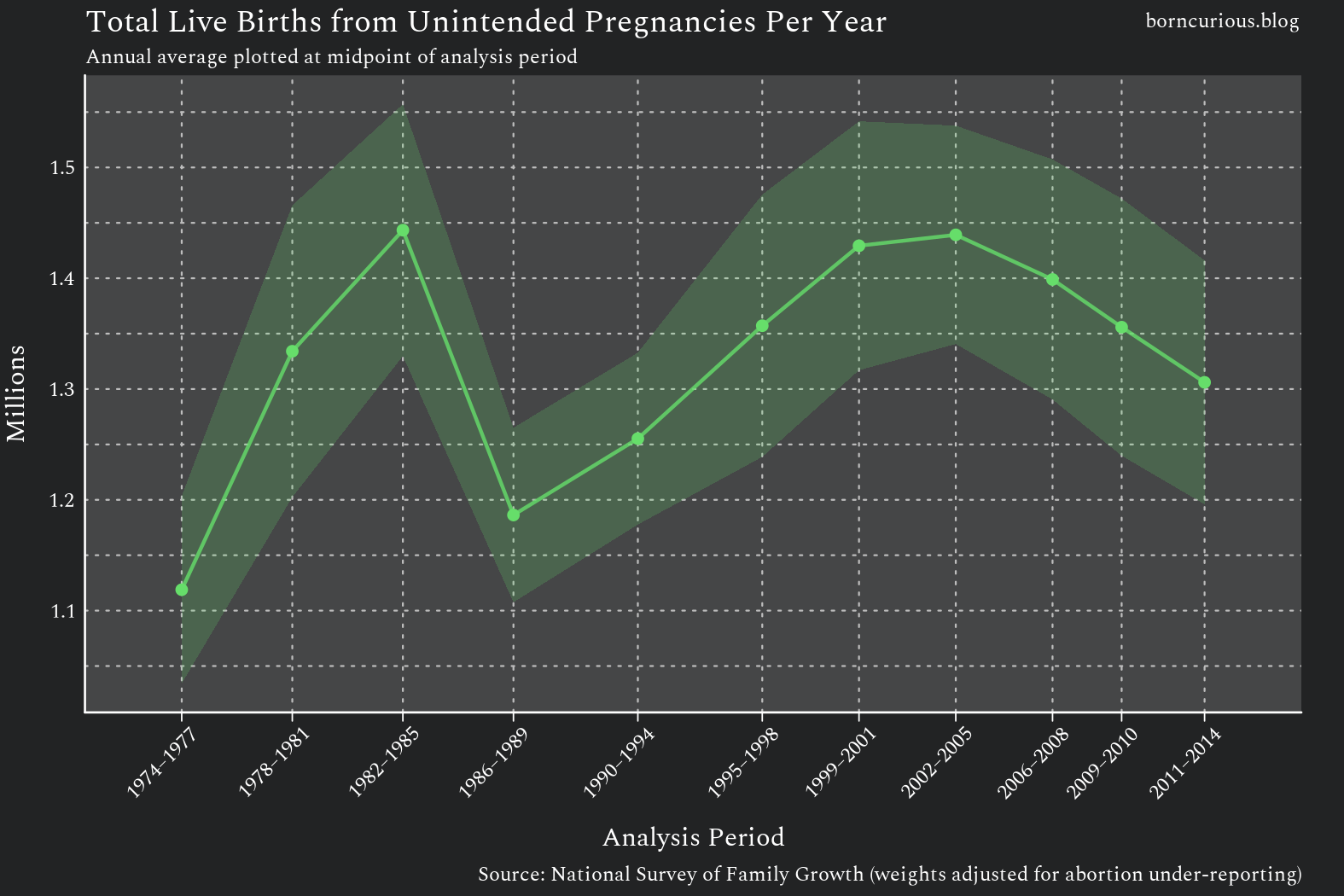
The number of live births that began as unintended pregnancies continued to increase throughout the 1970s and into the early 1980s. Again, let us adjust to get per capita estimates.
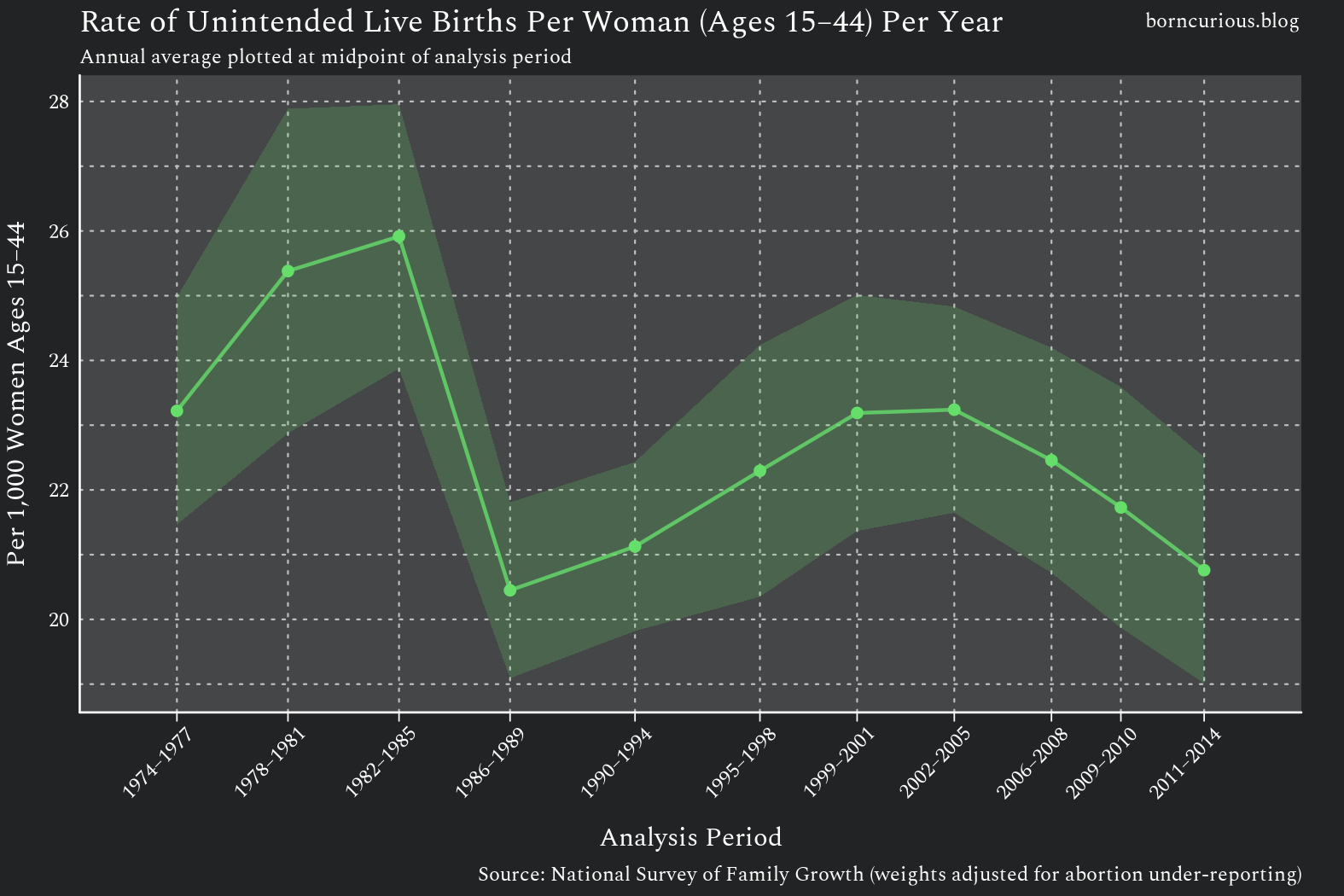
The increase in live births from unintended pregnancies in the 1970s and early 1980s is ever so slight when seen per capita.1
We learned in the previous analysis that most induced abortions (~90%) end unintended pregnancies, so whatever depression in the birth rate we see due to the post-Roe/Doe surge in abortions would show up especially among unintended pregnancies.
However, the rate of unintended pregnancy per woman continued to increase during the abortion surge, not decrease.
How can the abortion rate surge and the rate of births from unintended pregnancies continue to increase?
This is because the surge in the abortion rate in the 1970s and the slight increase in the rate of births from unintended pregnancies were both driven by the surge in the rate of unintended pregnancies.
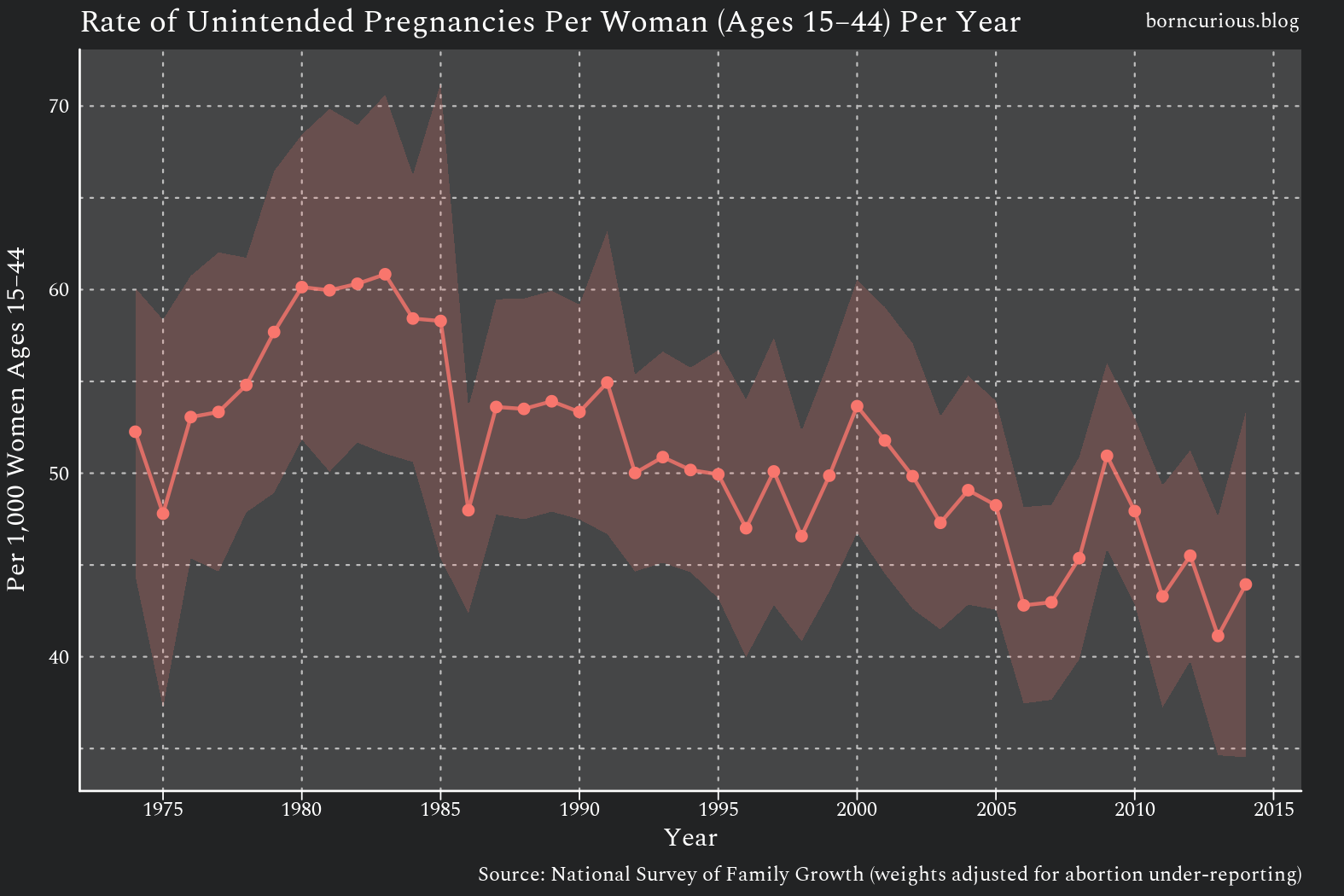
Even the surge in induced abortions after Roe v. Wade and Doe v. Bolton could not stop the sexual revolution’s legacy from increasing the rate of births from unintended pregnancies. The birth rate would have likely been even higher without the abortion rate surge, but the birth rate nonetheless continued to increase.
The surge in the rate of unintended pregnancies during the sexual revolution led to many millions of excess unintended pregnancies and millions of excess births from unintended pregnancies.
I checked, and the 95% confidence interval for the difference between the 1982-1985 and 1974-1977 rates just barely excludes 0, so if you believe in the magic α = 5% threshold, you can indeed say “statistically significant” if you like.
Are you familiar with the theory of risk compensation, Joshua? This theory would suggest the availability of abortion would increase risk-taking behaviour regarding unintended pregnancy.
https://injuryprevention.bmj.com/content/6/2/82
Anecdotally, in the UK during the 1970s, before the NHS covered the cost of abortions generally, a man who caused an unwanted pregnancy would pay the abortion clinic, on the basis that it was cheaper than raising a child.
There's an episode of UK 1970s TV cop drama 'The Sweeney' based on a robbery at a private abortion clinic. As a piece of social history it's indicative of attitudes of the time.